
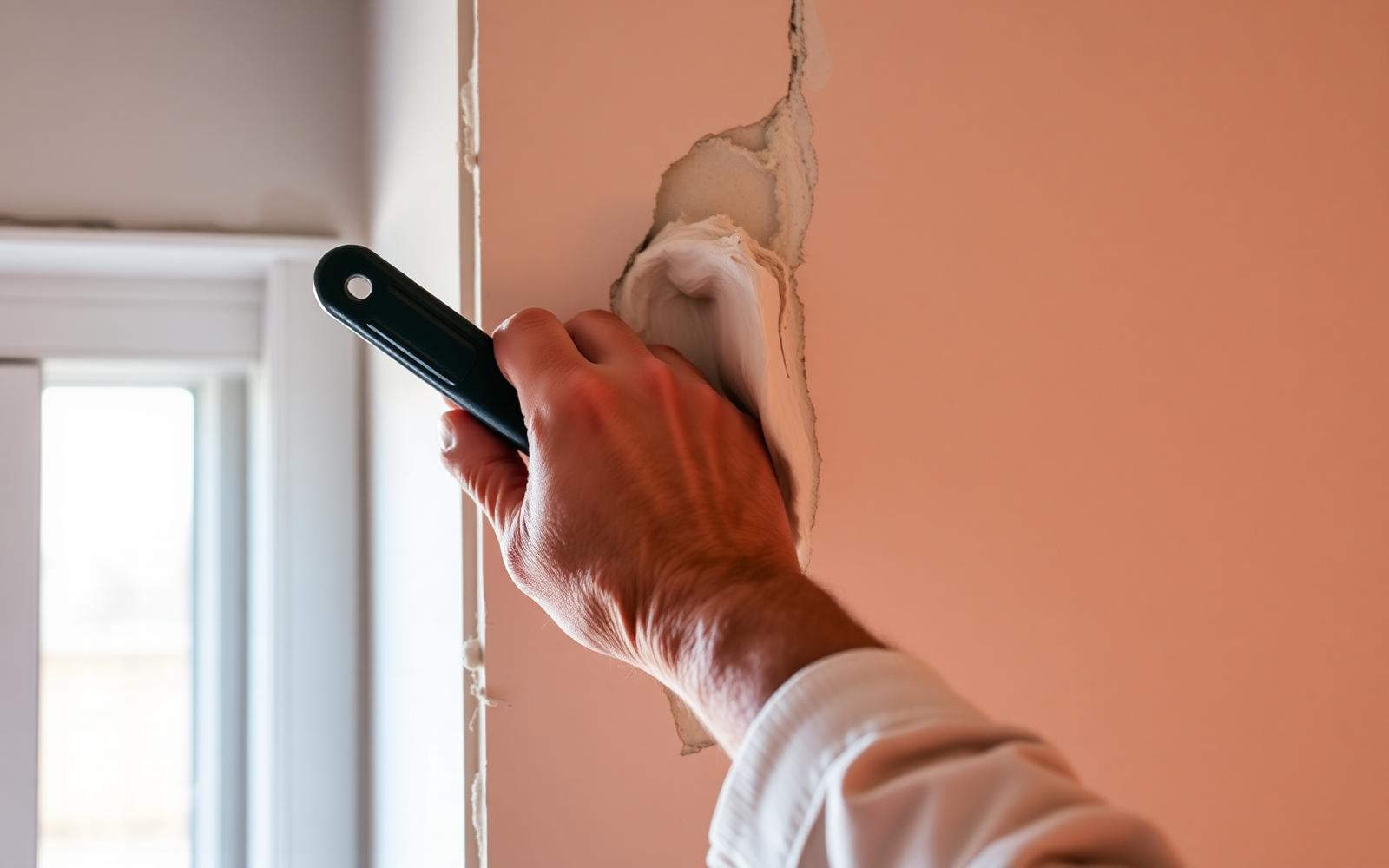
Most homeowners live with a little drywall damage for years. A dent behind a door, a crack above a window, a patch from an old plumbing repair that never quite disappeared. Some of it is genuinely cosmetic. Some of it is the wall telling you something. Here's how we sort one from the other when we walk a job.
1. The crack keeps coming back
A crack that reopens after being filled is almost never a filler problem. It usually means the joint underneath is moving — a failed tape seam, a seasonal shift in framing, or a poorly supported butt joint. Filling it again buys you a season at best.
The fix is to open the seam, re-tape it properly, and feather the compound wide enough that the repair disappears into the surrounding wall instead of standing proud of it.
2. The surface feels soft or spongy
Soft drywall means moisture has been in it. That can come from a slow supply line, a roof or flashing issue, condensation in an exterior wall, or a bathroom without enough ventilation.
- Find and stop the water source first — patching over it just hides the problem
- Cut back to dry, sound material rather than skimming over the soft area
- Replace insulation behind the cut if it was saturated
3. Nail pops are showing up in a line
One popped fastener is normal settling. A row of them along a stud usually means the fasteners were driven into wet lumber, or the drywall was never pulled tight to the framing. Re-setting fasteners and adding screws above and below each pop is the durable fix.
4. Corners and edges are chipping
Damaged corner bead is one of the most common repairs in a busy household — hallways, kitchen islands, and stairwells take the worst of it. Once the metal or vinyl bead is bent, compound alone won't hold. The bead gets replaced, then finished in coats.
If a repair takes three thin coats instead of one thick one, that's not slow work — that's the only way the patch stays invisible after paint.
5. You're painting the room anyway
The cheapest time to fix drywall is right before paint. Prep, dust control, and masking are already happening, and a fresh coat over corrected walls looks dramatically better than the same coat over old texture and shadow lines.
How we estimate drywall work
Every drywall job gets a free estimate and project-based pricing — one number for the scope of work, agreed before anything starts. No hourly meter running while compound dries.
You can get that estimate in person, by sending photos, or over the phone if the job is straightforward. Whatever's easiest for you.
Related services